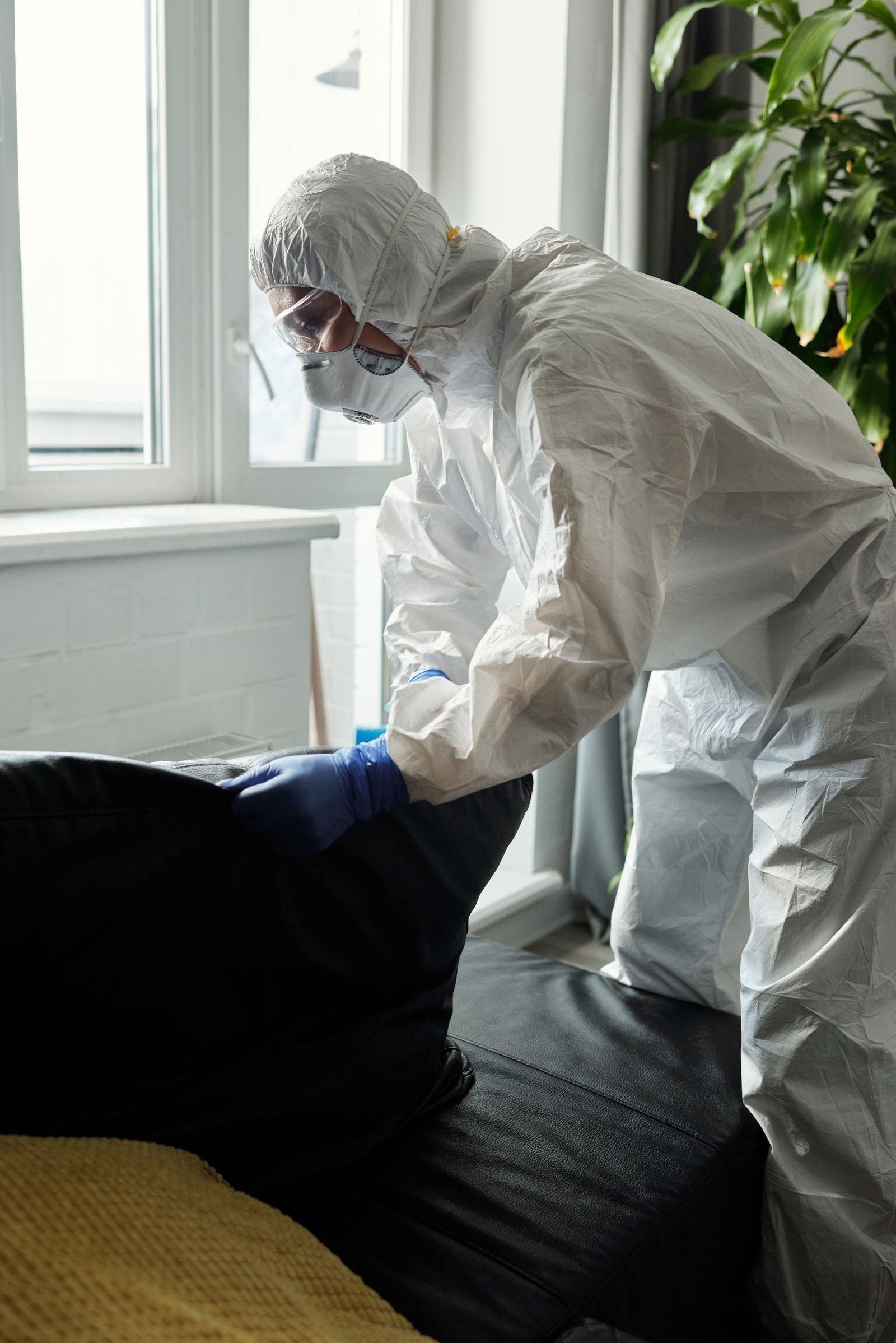
Why mold prevention isn’t optional
Georgia’s humid climate accelerates mold growth compared to drier regions, and South Fulton’s summer humidity makes the drying window even more time-sensitive. Waiting to see if a space "dries out on its own" is exactly the gap mold needs.
The prevention process
Fast extraction limits how much material gets saturated in the first place. Structural drying with monitored moisture readings removes the moisture mold needs to establish. Antimicrobial or biocide treatment is applied to affected surfaces, and humidity is controlled during and after drying rather than assumed once visible water is gone.
Where mold shows up when prevention fails
Behind baseboards, inside wall cavities, under carpet pad, and in HVAC ducting are the places mold establishes when moisture isn’t fully addressed — the same hidden-wall-moisture problem covered on the restoration hub, since it’s directly connected to whether mold prevention succeeds.
Signs mold may already be present
A musty odor, visible spotting, or allergy-like symptoms that improve when away from the home are signs worth taking seriously. This is factual, general guidance — not a diagnosis, and not meant to cause alarm.
Prevention vs. remediation — an honest distinction
Prevention is what happens during and immediately after a water event. Remediation is a separate, more involved process needed once mold has already established. If mold is already extensive by the time we’re called, this becomes a remediation job rather than pure prevention, and we set expectations accordingly instead of blurring the two.